
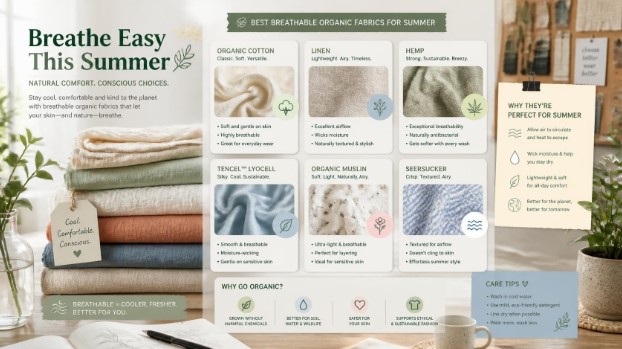

Summer collections demand fabrics that feel comfortable against the skin while performing well in warm, humid conditions. For apparel brands, selecting the right material involves balancing airflow, moisture management, fabric weight, drape, and the intended garment design.
Organic fabrics offer another consideration: how the fibre is cultivated and processed. However, organic status alone does not determine whether a material feels cool or handles perspiration well. Construction, yarn characteristics, and finishing influence how a fabric performs in everyday wear.
The challenge for designers and sourcing teams is to identify materials that suit their target customers without compromising the appearance or construction of the collection. A relaxed resort shirt, a fitted summer top, and a structured dress each require different fabric properties.
Which Organic Fabrics Work Best for Summer Apparel?
Exploring different organic fabrics helps apparel brands compare materials by their construction, texture, and intended application. The following options offer different advantages for warm-weather collections, although the final performance depends on the specific fabric rather than the fibre name alone.
1. Organic Cotton for Everyday Summer Wear
Organic cotton is a practical option for brands developing everyday apparel. Its softness, versatility, and ability to absorb moisture make it suitable for garments worn directly against the skin.
Best suited to: T-shirts, kurtas, casual shirts, dresses, and lightweight loungewear.
Cotton’s performance varies with fabric construction. A lightweight, loosely constructed cotton may allow more airflow than a dense, heavy fabric made from the same fibre. Jersey knits offer flexibility for casual clothing, while plain-weave cottons can provide a more defined silhouette.
For bulk orders, check GSM, yarn quality, shrinkage, and colourfastness. Brands should also verify the organic credentials of the specific material rather than assuming that every cotton fabric marketed as natural is certified organic.
2. Hemp for Structured, Breathable Garments
Hemp is worth considering when a summer collection requires a fabric with more body and a distinctive natural texture. Depending on its yarn and construction, hemp fabric can offer durability and useful airflow without relying on an especially delicate weave.
Best suited to: Overshirts, relaxed trousers, summer jackets, dresses, and co-ord sets.
Hemp fabrics may initially feel firmer than cotton, although washing and finishing can influence their softness. Hemp-cotton blends offer another option, combining the characteristics of both fibres.
When sourcing hemp for apparel, evaluate the fabric’s stiffness, drape, surface texture, and dimensional stability. A material suitable for a structured shirt may not work as well for a garment designed to flow loosely around the body.
3. Linen for Warm and Humid Conditions
Linen is valued for its crisp texture, characteristic creases, and ability to work well in warm-weather clothing. Its relatively low moisture retention compared with cotton can help it feel less damp under certain conditions, although comfort also depends on humidity, garment fit, and fabric construction.
Best suited to: Summer shirts, relaxed trousers, dresses, tunics, and resort wear.
Linen’s natural creasing is part of its visual character, but it may not suit brands seeking a consistently smooth finish. Blends can alter the drape, softness, and tendency to wrinkle.
Before ordering, assess the fabric’s weight, yarn irregularities, shrinkage, and finishing. If a collection requires matching shades across multiple garments, confirm how colour consistency will be maintained between production batches.
4. Khadi Cotton for Craft-Led Summer Collections
Khadi cotton brings a handspun and handwoven character to apparel. Variations in yarn thickness and surface texture can give garments a distinctive appearance, making it relevant to brands that want to incorporate textile craftsmanship into contemporary designs.
Best suited to: Summer kurtas, relaxed shirts, dresses, tunics, and resort-inspired clothing.
Khadi is not automatically lightweight or equally breathable in every form. Its performance depends on the yarn count, weave density, fabric weight, and finishing. A loosely woven version may feel airy, while a denser construction can provide greater coverage and structure.
For bulk sourcing, pay particular attention to shade variation, width consistency, fabric defects, and availability across repeat orders. Where handwoven production is involved, agree on acceptable variations before approving the final sample.
5. Organic Bamboo-Based Fabrics for Soft Summer Apparel
Bamboo-derived textiles can offer a soft hand feel and fluid drape, depending on the manufacturing process and fabric construction. They may be relevant to brands looking for smooth materials for comfortable, lightweight clothing.
Best suited to: Soft tops, dresses, relaxed loungewear, and selected knit garments.
The terminology matters here. Bamboo-derived viscose or rayon is produced through chemical processing, so it should not be described as an entirely unprocessed natural fibre. Nor does bamboo origin alone establish organic certification or a lower environmental impact.
Brands should confirm the exact fibre composition, manufacturing process, and applicable certifications. Stretch, pilling, moisture behaviour, and washing performance should also be assessed before the fabric is selected for a commercial collection.
How to Compare Summer Fabrics Before Bulk Sourcing
The best fabric for a summer collection is the one that meets the garment’s performance requirements while remaining commercially viable. Fibre selection provides a starting point, but fabric-level specifications determine whether the material will work in production.
For businesses evaluating a sustainable fabric manufacturer in India, the sourcing discussion should cover the intended garment, material composition, construction, finishing, and documentation. These details help establish whether a fabric is suitable for the collection rather than relying on broad sustainability claims.
| Sourcing factor | What brands should evaluate |
| Fabric weight | Compare GSM with the intended garment and level of coverage. |
| Construction | Assess weave or knit density, airflow, and drape. |
| Moisture behaviour | Consider absorbency, drying time, and comfort in humid conditions. |
| Certification | Verify organic claims against the relevant product and certification scope. |
| Colourfastness | Test resistance to colour loss during washing and exposure to light. |
| Dimensional stability | Check shrinkage and changes in shape after laundering. |
| Supply consistency | Confirm minimum order quantities, lead times, and repeat-batch availability. |
Sample testing should include the actual care process expected for the finished garment. A lightweight fabric may feel comfortable as a swatch but become less suitable after washing if it shrinks excessively or loses its intended shape.
How Brands Can Build a More Considered Summer Collection
Material selection works best when it begins with the garment rather than a sustainability label. Organic cotton can serve everyday basics, hemp can support more structured silhouettes, linen can suit relaxed summer clothing, and khadi can introduce a distinctive woven texture. Bamboo-derived fabrics may offer softness where the composition and processing meet the brand’s requirements.
Before approving bulk production, compare samples against the design brief, verify relevant certifications, and establish clear quality tolerances with the supplier. This reduces the risk of choosing a fabric that looks appropriate initially but performs differently during garment construction or regular wear.
A well-planned sourcing process brings together comfort, construction, material transparency, and supply reliability. For apparel brands developing summer collections, those considerations provide a stronger foundation for choosing fabrics that meet both customer expectations and production needs.